Open-ended play, explained: how unstructured time builds brains
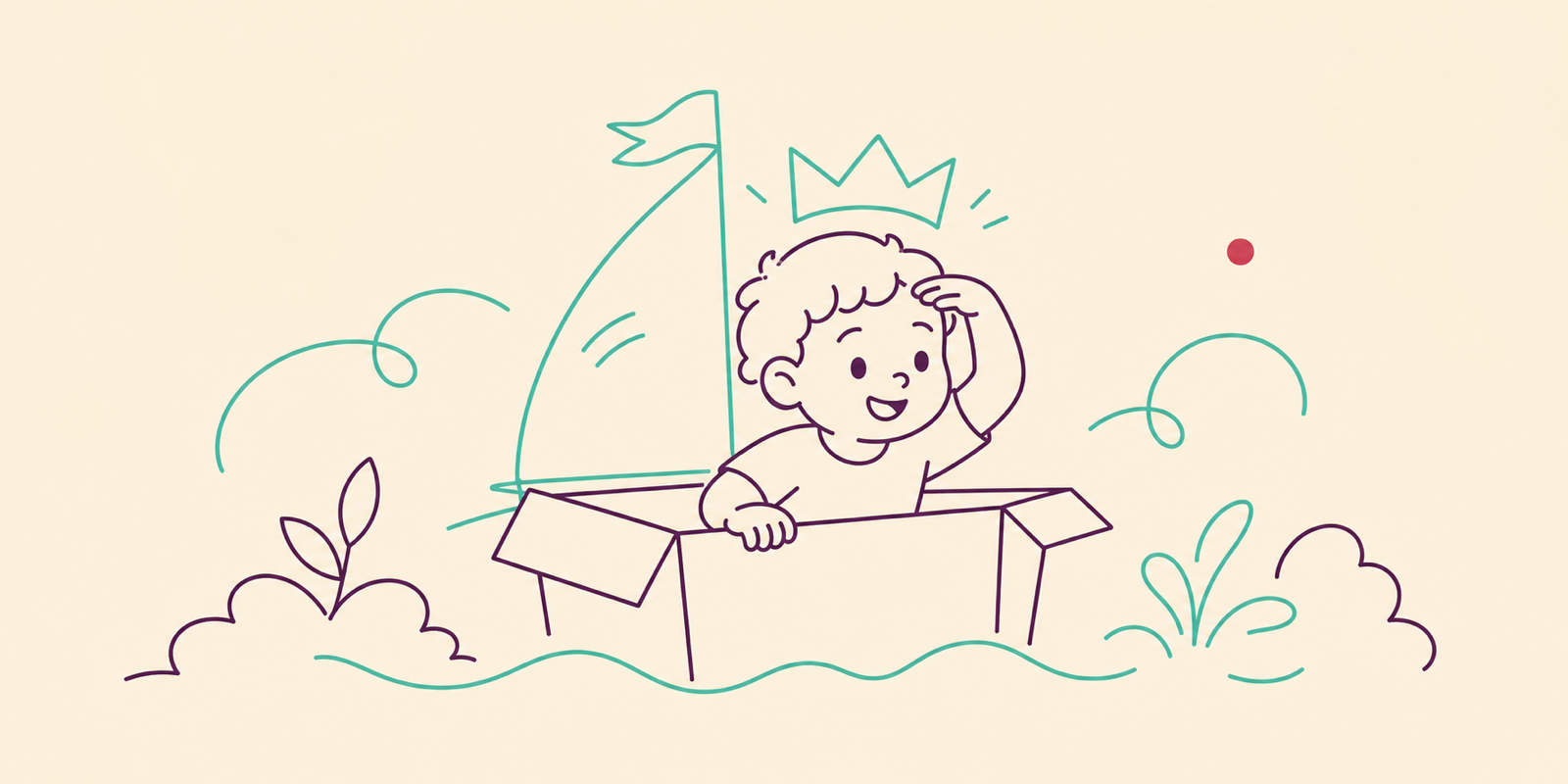
“He’s just playing” might be the most misleading sentence in parenting. Unstructured, child-led play is some of the most serious developmental work a toddler does all day.
What’s happening under the hood
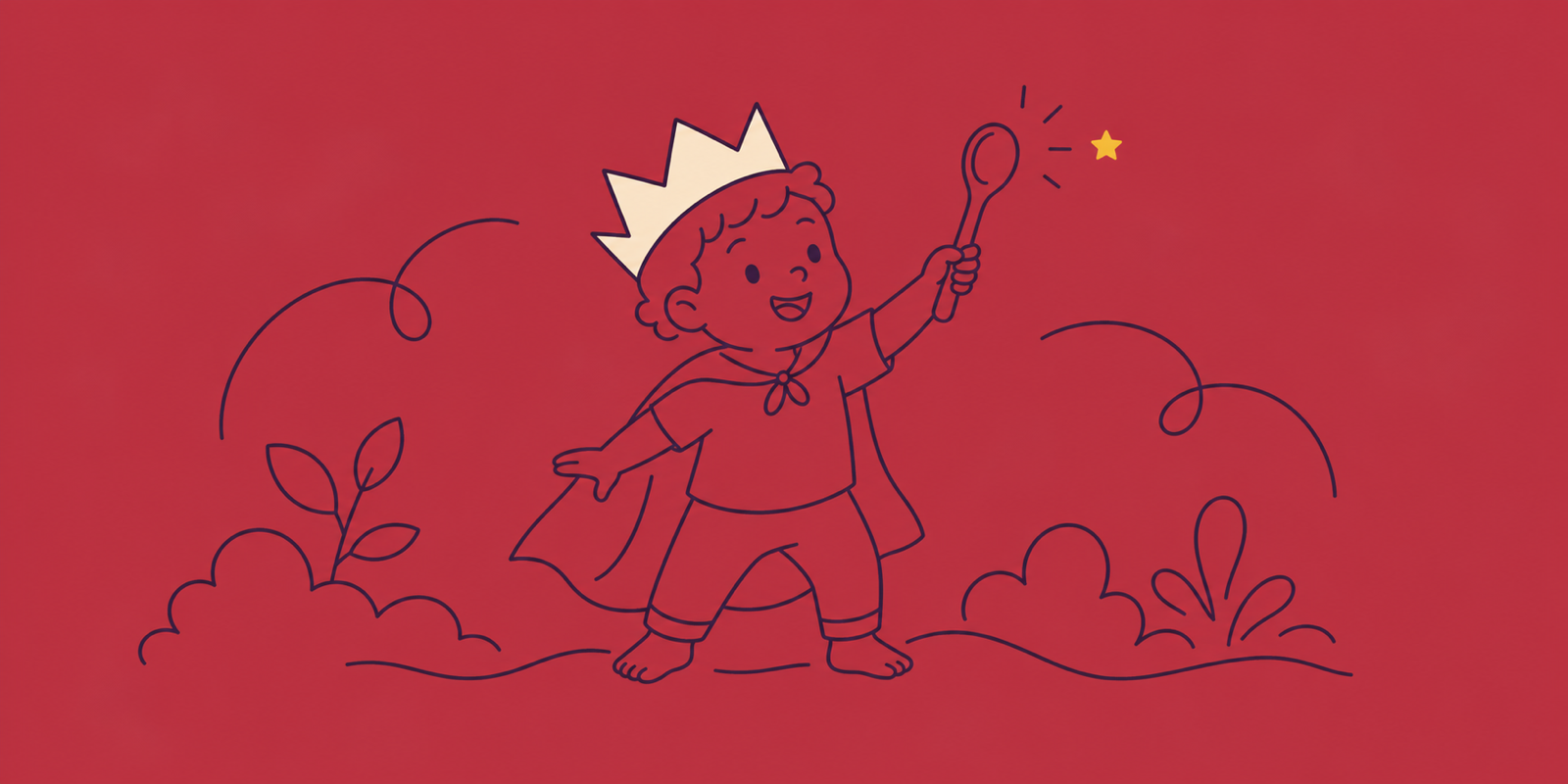
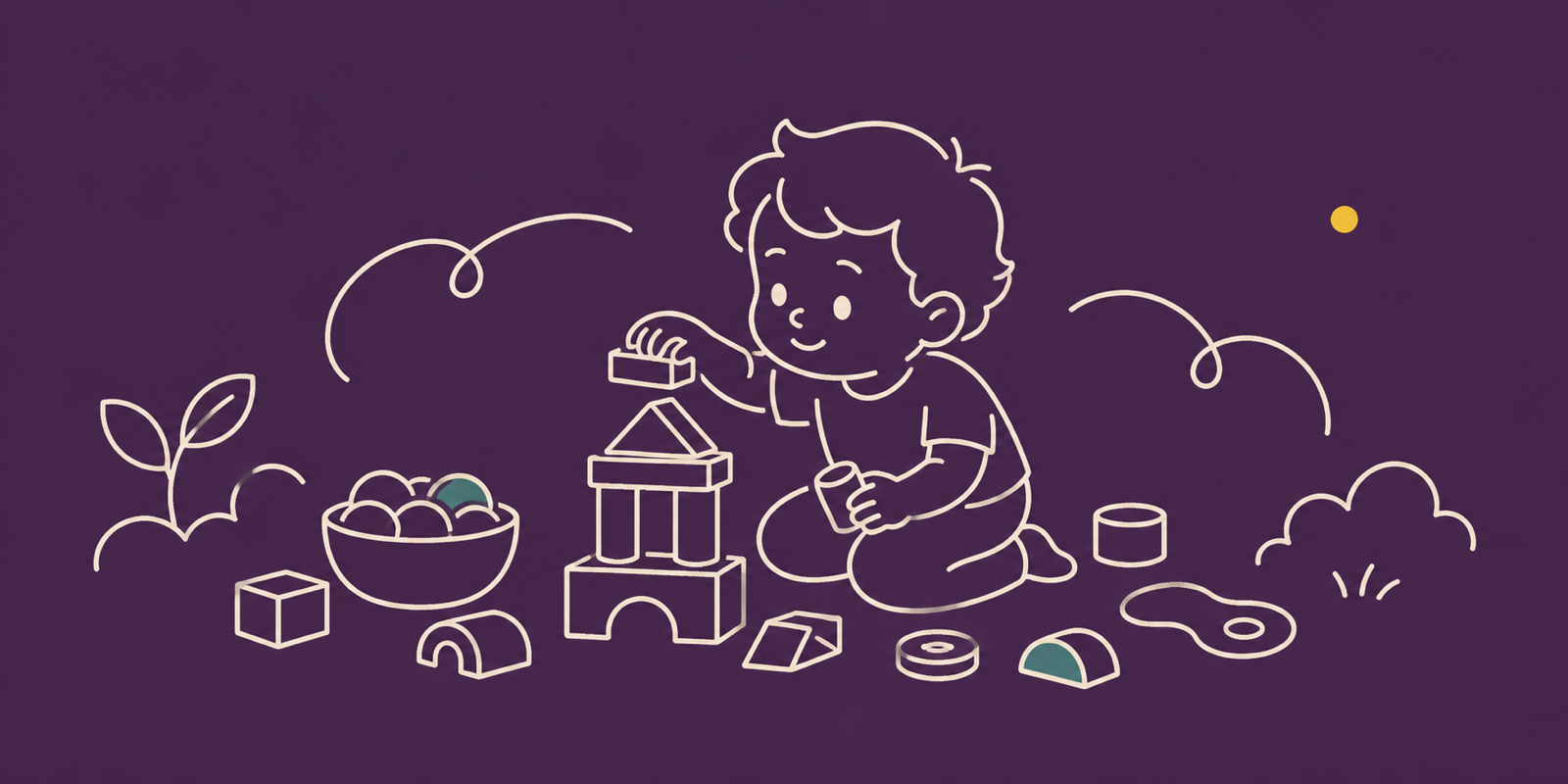
In open-ended play, a toddler sets a goal, improvises, hits a snag, and adjusts — the raw material of executive function (planning, focus, flexibility, impulse control). Pretend and loose-parts play also build language, early math concepts (more, less, balance, sorting), and crucially, self-regulation: when a child narrates and directs their own play, they’re practicing the inner voice that later helps them wait and cope.
You’ll often see “schemas” — repeated themes like filling and dumping, lining up, or wrapping things up. They look pointless and are anything but; they’re a toddler running experiments.
Child-led doesn’t mean hands-off. It means the child holds the steering wheel while you ride along.
Try this today
- Protect a daily block of unstructured time with simple materials and no agenda.
- Comment more than you command: “you stacked three!” beats “put it here.”
- Tolerate the mess and the repetition — both are the work, not a detour from it.
Educational content, not medical advice. toddcovery does not diagnose. If something about your child’s development worries you, your pediatrician is the right first call.