Why a cardboard box beats the $80 toy
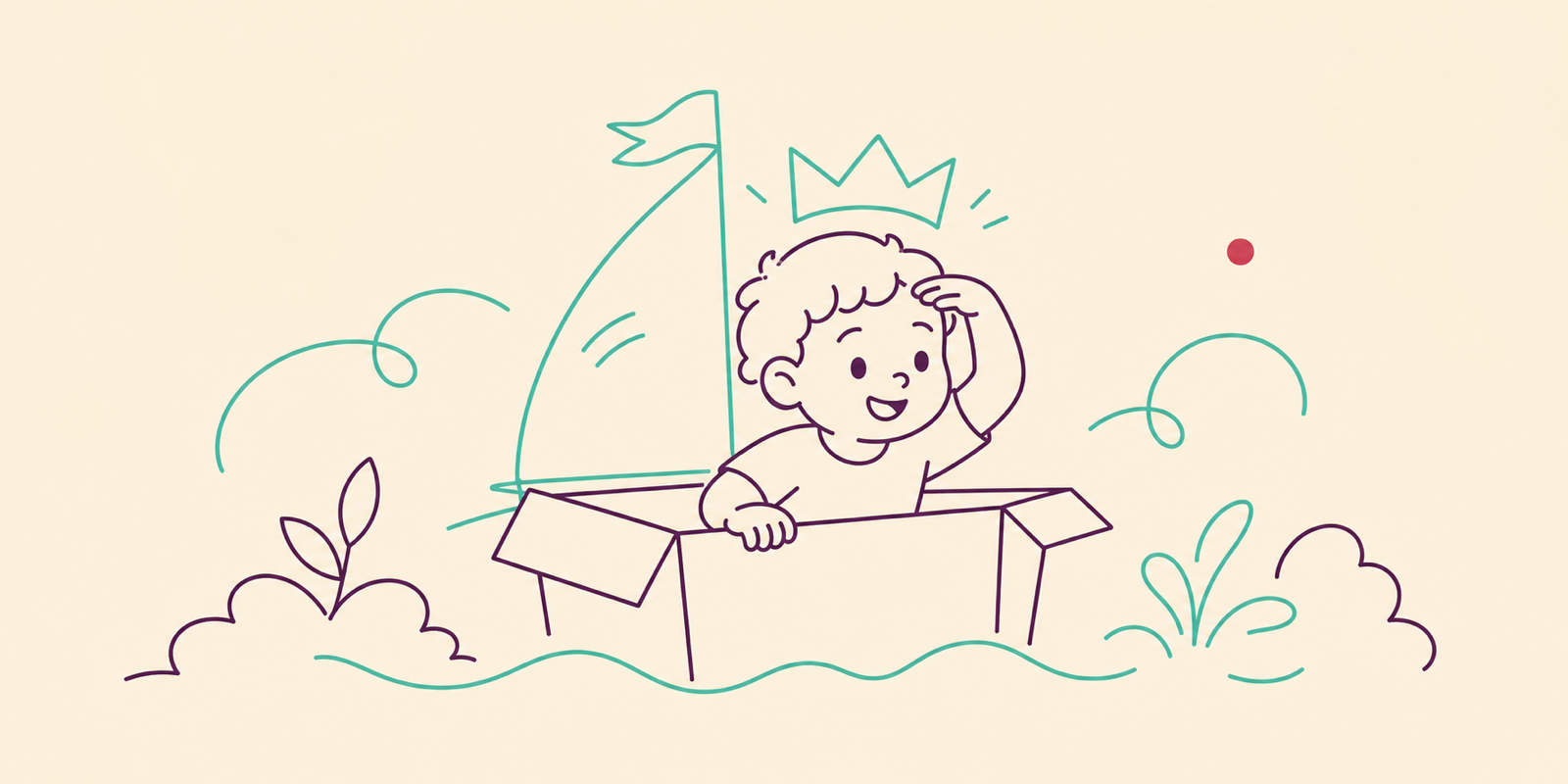
Every parent has watched it happen: the expensive toy gets a polite glance, and the box it came in becomes a boat, a cave, a car, and a hat. That’s not a fluke — it’s development telling you something.
Why the box wins
Open-ended materials can become anything, so the child has to supply the idea, the story, and the rules. Single-purpose electronic toys do the opposite: they light up, talk, and decide. In one well-cited study, toddlers playing with electronic toys heard fewer words from their parents and produced fewer themselves than during play with books or traditional toys — the toy was doing the talking.
A box, by contrast, demands imagination, problem-solving, and language. It has high “play value” precisely because it does so little on its own.
The less a toy does, the more your child has to.
Try this today
- Offer open-ended objects: boxes, cups, scarves, blocks, pots and pans.
- Follow, don’t direct. Let the box be whatever they say it is; add a line to their story.
- When buying, ask: “can this be ten things?” If it can only be one, it’ll bore them fast.
Educational content, not medical advice. toddcovery does not diagnose. If something about your child’s development worries you, your pediatrician is the right first call.