
Let’s start somewhere reassuring: you do not need a psychology degree to raise a happy toddler. You are already reading, already noticing, already the world’s leading expert on your child. What a good book gives you isn’t a rulebook — it’s a calmer voice in your head for the 5 p.m. meltdown, the third “no” in a minute, the moment you’re sure everyone else got the manual. Reading a little isn’t about doing more. It’s about second-guessing yourself less.
So this isn’t a pile of homework. These five books earned their spot because each one quietly changes how a hard afternoon feels — and because, between them, they cover the whole of the toddler years: the big feelings, the learning, the talking, the everyday independence, and the tantrums that test us all. Below, we walk through them the way we’d talk you through them over coffee: what the book actually is, who wrote it, and how many evenings it’ll really take. Then, for each, a card with our developmental psychologist’s rating — tap the stars to see exactly how it was scored — and a personal note from AM. Start with any one. Even a single book, half-read, is a win.
1. The one that explains the meltdown
If you read only one, read this. The Whole-Brain Child takes the single most useful idea in modern child development — that a toddler’s brain is still under construction, with the calm, reasoning “upstairs” part years from finished — and turns it into twelve simple strategies you can use before dinner. Suddenly the floor-tantrum isn’t defiance; it’s a small brain that has flipped its lid and needs your calm to come back online. That reframe alone is worth the cover price.
It’s written by Dan Siegel, a clinical professor of psychiatry at UCLA, and Tina Payne Bryson, a parenting therapist — but you’d never guess it from the tone, which is warm, cartoon-illustrated, and refreshingly free of jargon. At roughly 176 pages it’s a genuine weekend read, and the “Whole-Brain” summary sheet at the back means you can revisit the whole thing in ten minutes when you need it.
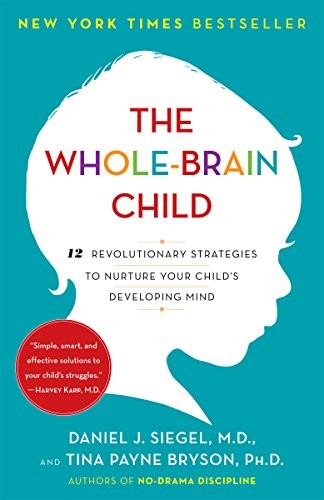
The Whole-Brain Child
Daniel J. Siegel, MD & Tina Payne Bryson, PhD
≈176 pagesA weekend read (~4–5 hrs)Ages 0–12, gold for toddlers
AMView on Amazon →AM · expert noteThis is the book I quote back to myself at 5 p.m. “Connect, then redirect” has defused more of our tantrums than any technique I’ve tried. If you only ever buy one from this list, make it this one — then keep it where you can grab it.
2. The one that takes the pressure off
The Carpenter and the Gardener answers a question you may not have known was crushing you: is it my job to build a particular child, like a carpenter following a blueprint — or to grow one, like a gardener who tends the soil and trusts what unfolds? Alison Gopnik makes the case, beautifully, for the gardener. Your toddler’s messiness, their endless “why,” their refusal to be optimised — these aren’t bugs to fix but the very engine of how young humans learn.
Alison Gopnik is a professor of psychology at UC Berkeley and one of the world’s leading researchers on how children think; this is the most science-dense book on the list, and the most philosophical. It’s a slower read — around 320 pages and best savoured over a couple of weeks — but it changes the background music of parenting from anxious project-management to something looser and kinder.
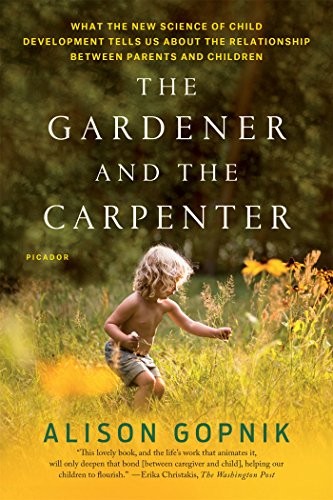
The Carpenter and the Gardener
Alison Gopnik, PhD
≈320 pagesA slower burn (~7–8 hrs)Shifts how you see the job
AMView on Amazon →AM · expert noteThis one didn’t give me a technique — it gave me permission to relax. On the days I catch myself “managing” my toddler like a project, I remember Gopnik’s gardener and let a little more mess happen. It’s the antidote to parenting burnout.
3. The one you’ll use tomorrow morning
Some books explain; this one equips. How to Talk So Little Kids Will Listen is the toddler-specific field manual for the daily standoffs — the shoes, the car seat, the broccoli, the “I do it myself.” Its tools (acknowledge the feeling, offer a choice, give in fantasy what you can’t in reality) sound almost too simple until the first time “You wish you could have ice cream for breakfast!” melts a tantrum in real time. Comic strips show each tool in action, so you can find what you need in the middle of a hard moment.
Joanna Faber and Julie King grew up inside this work — Joanna is the daughter of Adele Faber, who wrote the classic How to Talk So Kids Will Listen — and they’ve rebuilt it for the under-sevens. It looks long at ~432 pages, but it’s designed to be dipped into by problem, not read cover to cover. Keep it on the shelf and reach for the chapter that matches today’s battle.
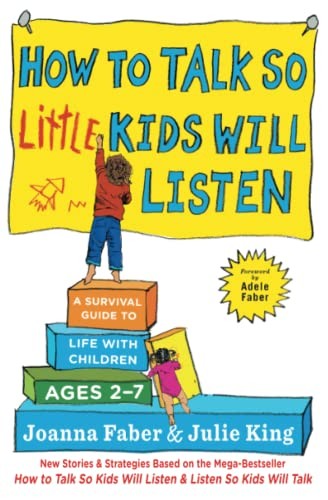
How to Talk So Little Kids Will Listen
Joanna Faber & Julie King
≈432 pages (very skimmable)Dip-in (~5–6 hrs)Built for ages 2–7
AMView on Amazon →AM · expert noteThe most immediately practical book here. “Give in fantasy what you can’t give in reality” sounded gimmicky until it stopped a supermarket meltdown cold. I keep it by the kitchen table and re-read one comic strip whenever a phase catches me flat-footed.
4. The one for everyday independence
The Montessori Toddler is the most hands-on book on the shelf — a calm, gorgeously photographed guide to setting up your home and your day so a one-to-three-year-old can do more for themselves. It’s less about theory and more about the low hook for their coat, the small jug they can actually pour from, the “help me to do it myself” posture that turns everyday chores into learning. If your toddler’s battle cry is “I do it,” this book is on their side and yours.
Simone Davies is a Montessori teacher and parent educator in Amsterdam, and her tone is unfailingly gentle and non-dogmatic — you take what fits your family and leave the rest. At around 256 pages with plenty of photographs, it reads quickly and doubles as a reference you’ll flip back through as your child grows.
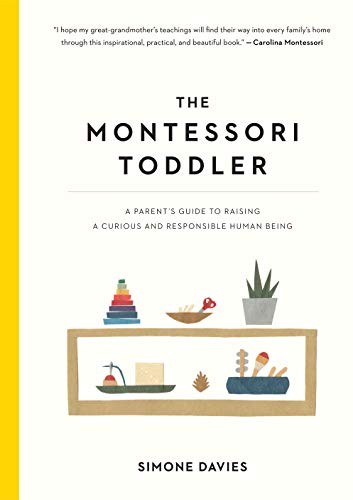
The Montessori Toddler
Simone Davies
≈256 pagesAn easy read (~5 hrs)Purpose-built for 1–3s
AMView on Amazon →AM · expert noteThis is the one that changed our house, not just my head. Lowering a few things to toddler height cut the daily “I can’t reach” battles more than any script. Take what fits — even a couple of changes buy real calm.
5. The one for the tantrum in progress
Finally, the book for the storm itself. The Happiest Toddler on the Block reframes a melting-down toddler as a “little caveman” whose thinking brain has temporarily left the building — and gives you a specific, almost theatrical way to reach them: the “Fast-Food Rule” and “Toddler-ese,” short phrases mirrored back with feeling before you try to reason. It feels odd the first time and then it works, because it meets a flooded toddler where they actually are instead of where we wish they were.
Dr Harvey Karp is a pediatrician best known for The Happiest Baby on the Block; here he turns the same practical, slightly showman’s energy on the 1–4 crowd. Around 304 pages, it’s an easy few-evening read, and its techniques are the kind you can practise the very next time the floor becomes a stage.
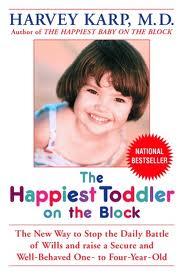
The Happiest Toddler on the Block
Harvey Karp, MD
≈304 pagesA few evenings (~6 hrs)Squarely ages 1–4
AMView on Amazon →AM · expert noteToddler-ese felt ridiculous until it pulled my daughter out of a full meltdown in about thirty seconds. You’ll feel silly doing it. Do it anyway. It’s the emergency tool I’m most glad I practised before I needed it.
That’s the shelf. You don’t need all five this month — or ever. Pick the one whose problem sounds most like your Tuesday, read even half of it, and let it do its quiet work. The goal was never to parent by the book. It’s to have a few wise, warm voices in your corner for the moments that make you doubt yourself — and every one of these earns that place.
A quick, honest note: some links here are affiliate links, so if you buy through them toddcovery may earn a small commission — at no extra cost to you. It never changes what makes the list. We only recommend what we’d genuinely press into a friend’s hands; money can’t buy a place here.
Educational content, not medical advice. toddcovery does not diagnose. If something about your child’s development worries you, your pediatrician is the right first call.