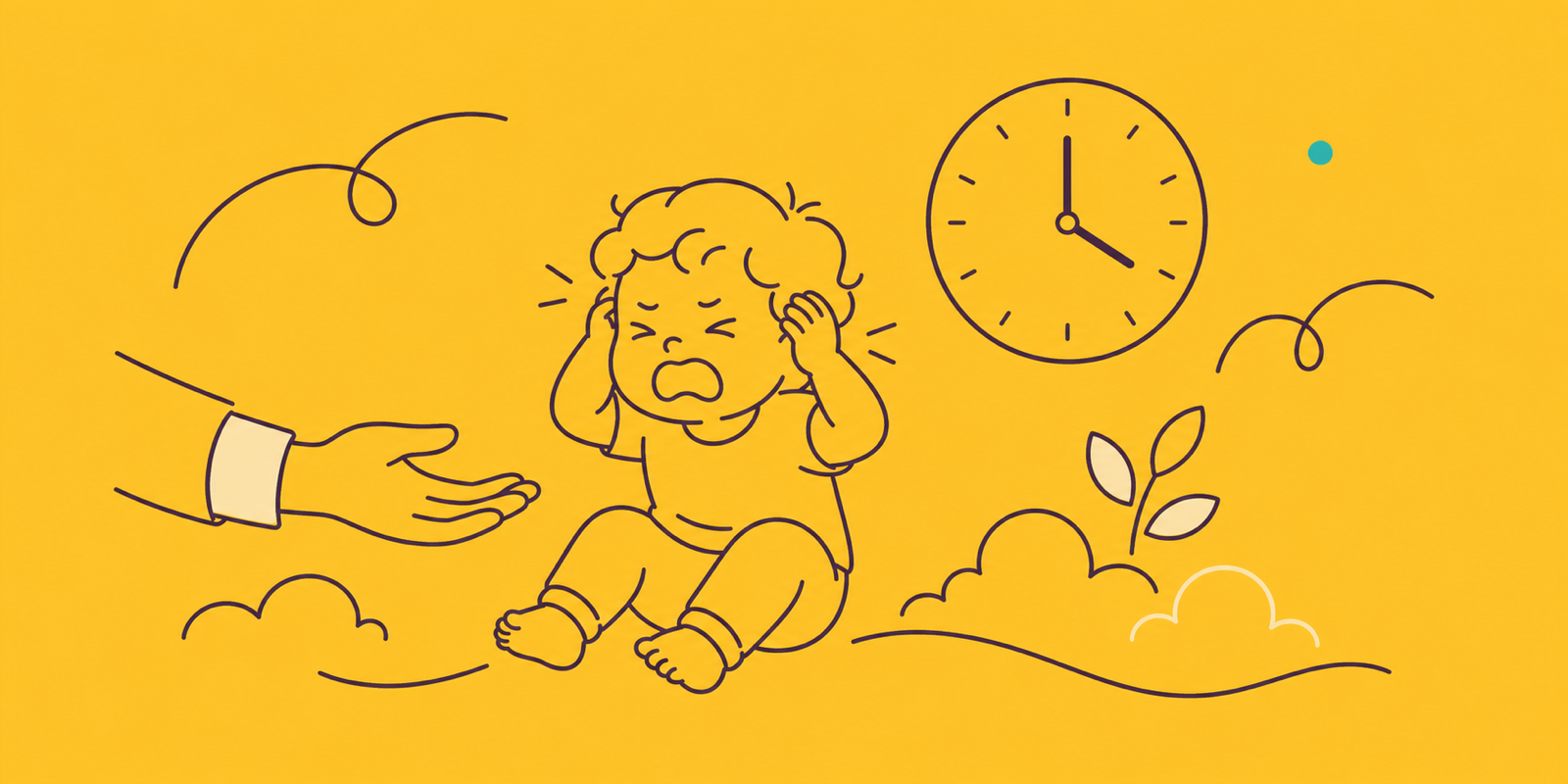
Tantrums aren’t misbehavior — they’re development
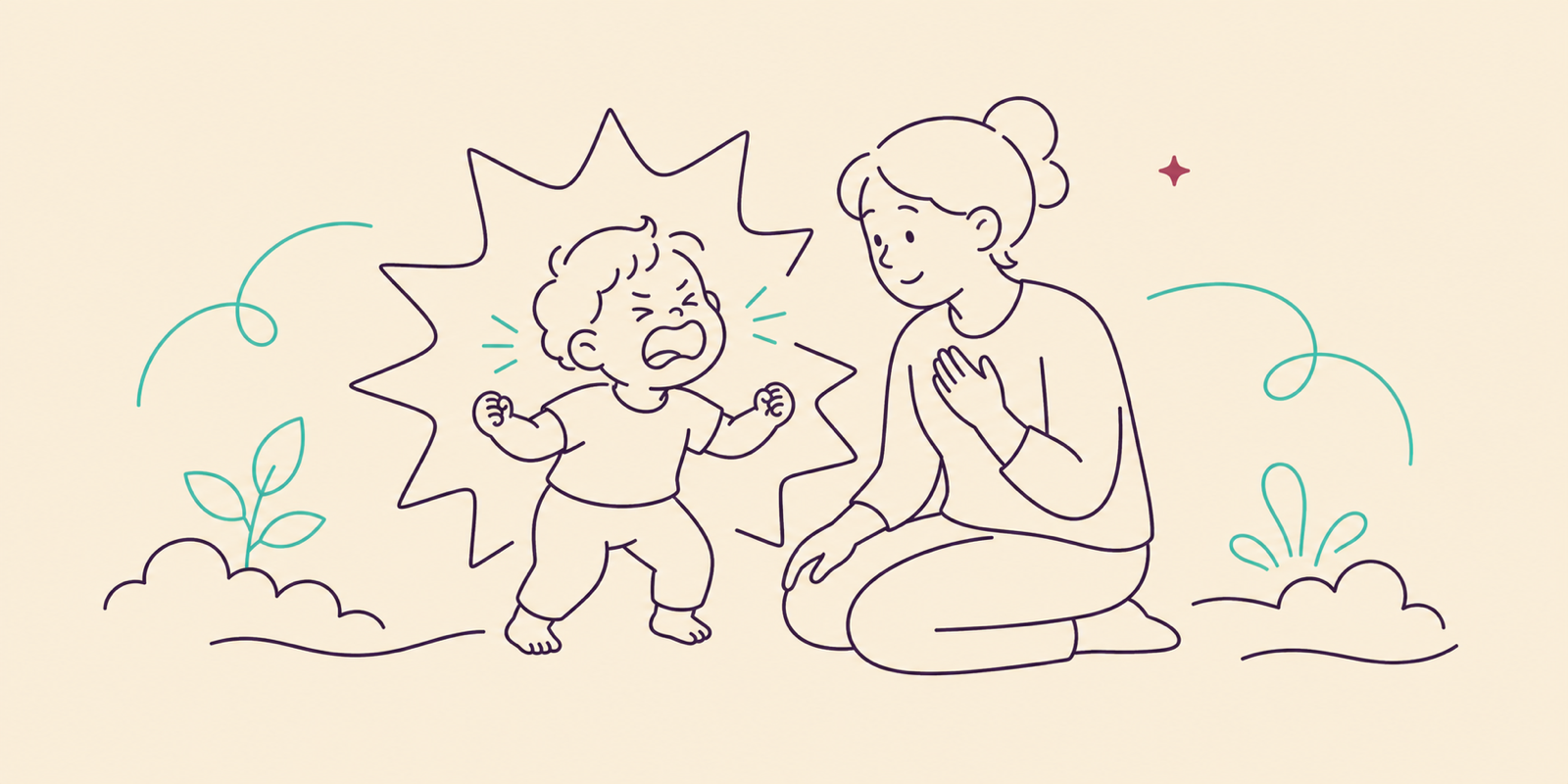
It helps to know, mid-meltdown on the kitchen floor, that a tantrum is not misbehavior. It’s a developing brain hitting the limits of a system that isn’t built yet.
What a tantrum really is
The toddler’s prefrontal cortex — the brake pedal for big emotions — is years from mature. The emotional alarm system (the amygdala) is fully online and loud. So when frustration, hunger, or tiredness spikes, a toddler genuinely cannot reason their way down the way an adult can. Tantrums peak between roughly 18 months and 3 years for exactly this reason, and they’re most common in children who are otherwise developing typically.
This also means tantrums usually aren’t manipulation. A child in full meltdown has “flipped their lid” — they’ve lost access to the thinking part of the brain, so logic, bargaining, and lectures bounce right off.
You can’t teach a regulation skill during the storm. You can only lend your calm until the storm passes.
Try this today
- Safety and presence first. Get low, stay calm, keep words few: “I’m here. You’re safe.”
- Name the feeling once it eases: “you were so mad the block fell.”
- Prevent where you can: protect sleep and snacks, and offer small choices to head off power struggles.
Educational content, not medical advice. toddcovery does not diagnose. If something about your child’s development worries you, your pediatrician is the right first call.