Co-viewing: the screen-time rule that actually holds up
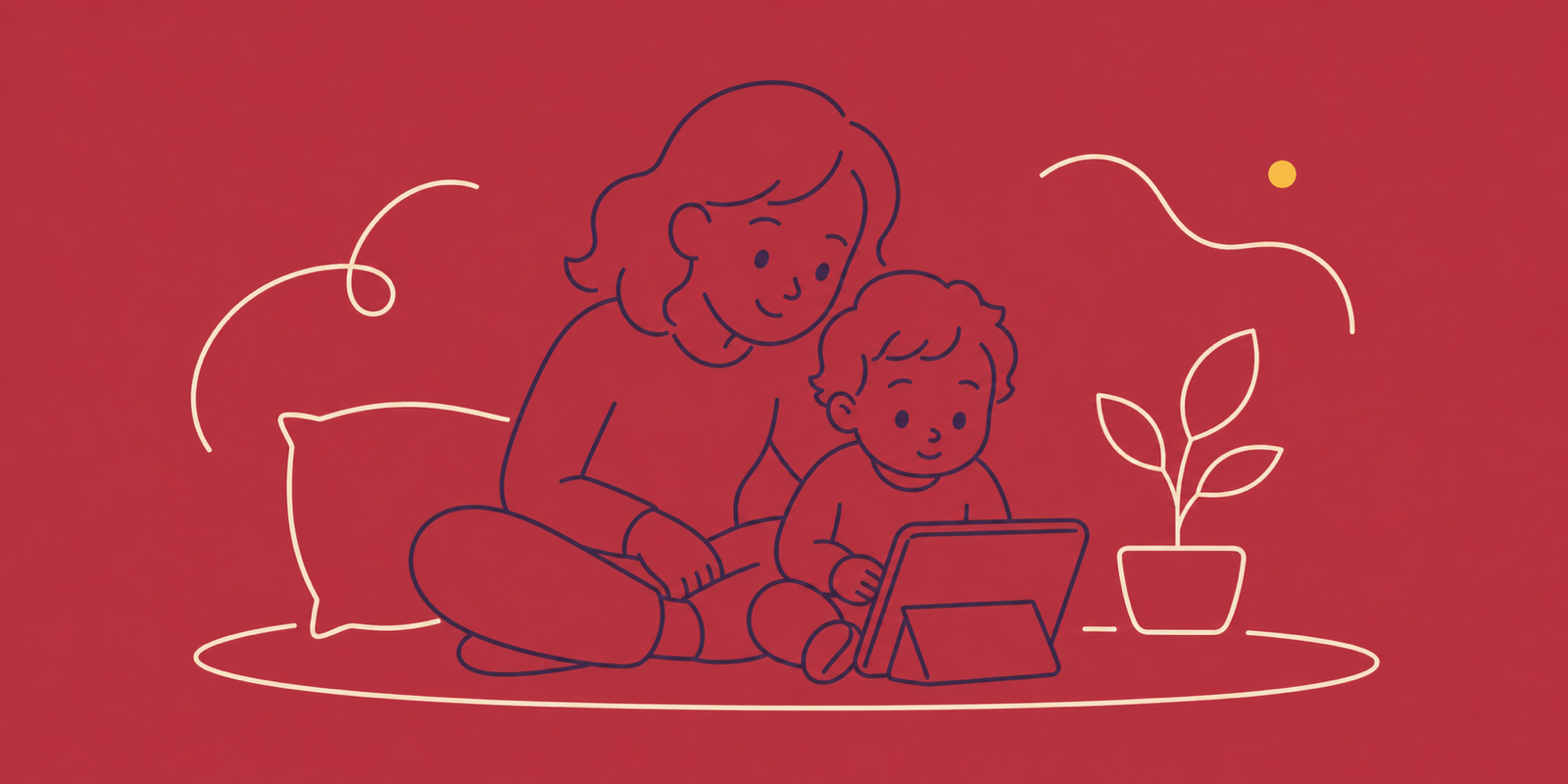
If you remember one thing about screens in the toddler years, make it this: who is in the room matters more than the number of minutes. Of all the screen-time findings, this one is unusually robust.
Why co-viewing works
Young toddlers struggle to transfer what they see on a 2-D screen to the 3-D world — researchers call it the “video deficit.” A caring adult bridges that gap. When you watch together and talk about what’s happening — naming, asking, connecting it to real life — passive watching becomes a shared language activity. This is what experts mean by joint media engagement.
It also reframes the guilt. Twenty minutes of a show you watch with your child, talking along, is a categorically different thing from the same show watched alone in the background.
A screen with a conversation on top of it is closer to a picture book than to “screen time.”
Try this today
- Sit in. Watch a little of it with them and react out loud — “uh oh, where did the dog go?”
- Bridge to real life: “We have a red ball like that one — should we find it?”
- Pick slow, simple shows with real-world content over fast, frantic ones.
Educational content, not medical advice. toddcovery does not diagnose. If something about your child’s development worries you, your pediatrician is the right first call.